Thursday, March 24, 2011
Do you put the word "the" in front of "God"?: A brief history of domestic crimes committed by the CIA
I remember a senator once asked me. When we talk about "CIA" why we never use the word "the" in front of it. And I asked him, do you put the word "the" in front of "God"?
Those are the chilling last words of Robert De Niro’s CIA epic, The Good Shepherd. Some may dismiss the following line as dramatic context, just merely adding to the climax of the film, but if one looks at the history of the Central Intelligence Agency and the illegal domestic acts committed by it, the message of this quote proves to be disturbingly accurate. Through the following examples it is clear that the CIA is more concerned with power, and it’s domination over the American people, rather than protection of the country. But it’s the ignorance of the American public that allows operations like the following to continue. If the public were educated on the history of the covert actions taken by his/her country, we could hold it accountable for its crimes.
The list of domestic CIA crimes is both long and controversial. For the purpose of this paper, I chose only to focus on the most unbelievable and atrocious of offences. Also, keep in mind that I’m writing only about the operations that have come to light, one can only guess what crimes this alphabet agency continues to hide from the United States public. It’s also necessary to realize that it is illegal for the CIA to be running any sort of domestic operation, which falls under the purview of the FBI.
A good place to start would be with OPERATION HTLINGUAL. Originally named SRPOINTER, HTLINGUAL was a domestic mail opening program that lasted from 1952-1972, and was started under the rule of Allen Dulles as DCI(Director of Central Intelligence). CIA operatives would open mail destined for China and the Soviet Union. But before you try to defend this course of action, thinking that the CIA was just trying to catch Soviet spies, the mail of Martin Luther King, Jr. was also open under the guise of this program.
Another early program of the CIA would be OPERATION ARTICHOKE. Started in 1951, OPERATION ARTICHOKE was a project that involved the CIA, FBI, Air Force, Navy, and the Army. The overall objective of this project can be clearly seen in a memo which stated: Can we get control of an individual to the point where he will do our bidding against his will and even against fundamental laws of nature, such as self-preservation? It wouldn’t be long until OPERATION ARTICHOKE would evolve into the infamous PROJECT MKULTRA experiments.
Maybe one of the most disturbing operations covered in this paper, PROJECT MKULTRA was also started in the early 1950’s and was a human experimentation project. The overall objective of MKULTRA was both mind control and the extraction of information from the human brain. The CIA would experiment on unknowing American citizens by drugging them with LSD in attempting to hypnotize them. One of the most infamous cases was the death of Dr. Frank Olson, who was a scientist working for TSS(Technical Staff Services). The CIA invited Dr. Olson, and other scientist from TSS for a simple conference. The CIA served the unknowing participants drinks laced with seventy micrograms of LSD. Thirty minutes into the conference the TSS doctors were made aware that their drinks were spiked with the psychedelic drug, and their behavior was being monitored. Most of the agents reported little effect on their unwilling participants, except for Dr. Frank Olson. Dr. Olson apparently had a “bad trip” and suffered from extreme paranoia and had a nervous breakdown. The CIA sent him to New York to see a psychiatrist, who said that Olson should be placed into a mental institution. On the last night of his stay, Dr. Olson purposely threw himself out of the tenth story floor of his hotel room window, dying on impact. The circumstances of Dr. Olson’s death were not fully revealed to his family, and it would take two decades before Olson’s family received a full apology from President Ford(Melton 5-7). The atrocities didn’t stop there. MKULTRA became almost like an organic phenomenon, giving birth to other sub projects such as OPERATION MIDNIGHT CLIMAX, where prostitutes on the CIA payroll would seduce men, and bring them back to “safe” houses installed with two way mirrors. The prostitutes would drug the men with LSD before engaging in intercourse, and the agents behind the mirrors would study the effects. Unfortunately, we know little more of MKULTRA, most of the documents that pertain to this program were destroyed by DCI Richard Helms upon being fired by President Nixon at the height of the Watergate scandal.
Another operation that was started in the early 50’s was OPERATION MOCKINGBIRD, where the CIA had influence in both domestic and foreign media. Not knowing how far the CIA had penetrated the news media, many people doubted the existence of MOCKINGBIRD at all. It wasn’t until the Church Committee in 1976, who came to the conclusion:
“The CIA currently maintains a network of several hundred foreign individuals around the world who provide intelligence for the CIA and at times attempt to influence opinion through the use of covert propaganda. These individuals provide the CIA with direct access to a large number of newspapers and periodicals, scores of press services and news agencies, radio and television stations, commercial book publishers, and other foreign media outlets.”(Church Committee 375)
Along with this statement came proof that the CIA has tapped the phones of prominate news anchors and paid an unknown number of television employees to act as informants.
Another domestic operation was OPERATION CHAOS, which was started in 1967 by President Lyndon B. Johnson, but was later expanded and used in full force by President Richard M. Nixon. The purpose of OPERATION CHAOS was to determine if communists were funding and organizing student anti-war protest movements. Agents went as far as to plant people in anti-war protest groups, and tap student’s phones. Students were not only the victims of illegal covert surveillance, as the Black Panther Party and the Women Strike for Peace were also in the crosshairs of the CIA.
In 1962, another gut wrenching operation that was conjured by both the CIA and the Pentagon was OPERATION NORTHWOODS. OPERATION NORTHWOODS was a false-flag program that would have allowed the CIA to fabricate terrorist attacks(which would include hijackings and bombings) in major U.S. cities, resulting in the deaths of innocent Americans. The terror attacks would be blamed on Cuban operatives, thus allowing the United States to invade Cuba and topple the communist government of Fidel Castro, without any retaliation from the Soviets. Thankfully, the plan was turned down by President John F. Kennedy, and was never officially operational.
OPERATION NORTHWOODS was just one of the several plans concocted by the U.S. government to kill Fidel Castro. Hundreds of attempts would later be planned and carried out by every presidential administration since John F. Kennedy. One of the most intriguing plots would include an unlikely ally, the American Mafia. Before Castro and his rebels toppled the U.S. friendly government of Cuban dictator Fulgencio Batista, the American Mafia owned most of the casinos and racetracks in Havana. “President” Batista was not only friendly to the U.S. government, but to organized crime as well. The Mafia delivered him a “piece of the action” off the top of the millions they were making off of their brothels and gambling rackets in Havana, so much so that Havana would soon be called “the Latin Las Vegas”. But the party stopped in the early hours of January 1st, 1959, when Castro and his communist rebels overthrew the Batista regime, and took control of the country. Soon after his ascension into power, Castro closed all of the casinos and racetracks and chased all the elements of the American Mafia out of his country. He even placed Tampa Mafia Boss Santo Trifficante, Jr. under house arrested in one of his casinos for several months. So it would be no great surprise that the Mafia wanted Castro dead even more than the American government. The CIA formed an alliance with Sam Giancana (Mafia boss of Chicago), Santo Trifficante, Jr.,(Mafia boss of Tampa) and Carlos Marcello.(Mafia boss of New Orleans) A friendship was forged among this alliance. CIA field agent William Harvey developed a lifelong friendship with Chicago mobster Johnny Roselli.(Russo 386) There were a dozen Mafia/CIA plots, but obviously none of them were successful.
It is this strong friendship between Harvey and Roselli where some conspiracy theorist believe that the Mafia, along with rouge CIA agents, like Harvey, and bitter Cuban exiles all banded together to assassinate President Kennedy. There has been a dramatic flow of evidence in recent years suggesting Mafia involvement in the Kennedy assassination, including a declassified paper from an FBI informant that was sharing a cell with Mafia boss Carlos Marcello in the late eighties, who was imprisoned from the notorious BRILAB sting. When the informant asked Marcello about Kennedy, Marcello responded with : “Yea, I had the son of a bitch killed. I’m glad I did. I’m sorry I couldn’t have done it myself.”(Waldron 773) The informant would later claim Marcello approached him after he calmed down after his tirade and threatened his life if he ever repeated what Marcello had told him. But what about evidence linking the CIA? Well thanks to the JFK Act of 1992, which allowed for that FBI document about Marcello to be declassified, all government documents relevant to the JFK assassination must be declassified by 2017. The CIA has claimed publicly that it has no intention of declassifying the documents it possesses on the JFK assassination. Even though they are trying to find some sort of legal recourse, the CIA has publicly defied an act of Congress.
Another instance where the CIA has been involved with the Presidency is the infamous Watergate scandal, which drove President Nixon from the White House. It is important to note that Watergate burglars E. Howard Hunt and James McCord were both ex-CIA agents. Most of the Cubans also caught were veterans of the Bay of Pigs invasion, who have worked with Hunt in the past. It’s difficult to identify a starting point for the CIA’s involvement in Watergate, because when one is talking about the abuses of power committed by the Nixon administration, Watergate is just the tip of the iceberg. More than a year before Watergate, E. Howard Hunt and fellow burglar and ex-FBI agent G. Gordon Liddy were organizing a break in at Daniel Ellsberg’s physiatrist office to dig up dirt to discredit Ellsberg, who had leaked the Pentagon’s top secret study on America’s involvement in Vietnam. Hunt and Liddy needed fake ID’s, disguises, and tools to break into the office with, all which were supplied by Hunt’s contacts at the CIA. The CIA would also come to the aid of Hunt and Liddy later in a more sinister matter. Columnist Jack Anderson was writing damaging articles about President Nixon and his brother Donald. Liddy and Hunt decided to assassinate Anderson. The two went over various ways to make the columnist’s death look like an accident. A fatal car accident, and a mugging that turned into a shooting were all plots conjured by the two men. Eventually they decided on poising Anderson. Another one of Hunt’s CIA contacts met him and Liddy and gave them a cocktail of deadly poisons. The plan was to let Anderson unknowingly play “aspirin roulette”. One of the two would break into Anderson’s house and drop a poison pill into Anderson’s aspirin or medicine bottle. The two men got cold feet and decided to call off the “aspirin roulette” plot because there was no way they could make sure that Anderson’s wife wouldn’t take the poison pill meant for her husband. The two would eventually drop the idea of assassinating Anderson all together.(Emery 97-98)
When the Watergate scandal finally was exposed, and the blame was climbing higher and higher up the ranks of the White House, Nixon sent his fiercely loyal Chief of Staff, H.R. Haldeman, to talk to DCI Richard Helms and see if he convince the FBI not to pursue the matter of Watergate any further. Helms was hesitant at first, until Haldeman told Helms that the President thought that further investigation of the Watergate break in would open up the whole “bay of pigs” thing for the CIA. This statement enraged the usually calm CIA director, who went on to yell: “THIS HAS NOTHING TO DO WITH THE BAY OF PIGS, I HAVE NO CONCERN ABOUT THE BAY OF PIGS!” The stunned Haldeman would say again to Helms that this is what the President wanted to relay to him. Helms immediately agreed to Nixon’s ploy, and he would contact the FBI. In his book, The Ends of Power, Haldeman would claim that he believed that “the bay of pigs” eluted to the Kennedy assassination, and for fear of exposure, Helms agreed to stall the FBI in their investigation of Watergate.(Emery 192) But some historians see it differently. In his book, Legacy of Secrecy, Lamar Waldron believes that the Watergate break in was fumbled on purpose, to eject Nixon from the White House. Hunt, McCord, and most of the Cubans were all ex-CIA, and some believe that the exposure of Watergate was all a carefully crafted plan devised by Helms to stage a coup d'état against Richard Nixon.(Waldron 724)
Whether it was a CIA conspiracy within a conspiracy or not, the exposure of Watergate had damaging effects on the CIA. Right after the Watergate Committee was done, the Select Committee to Study Governmental Operations with Respect to Intelligence Activities was formed, which was organized to investigate the crimes of the CIA and other intelligence agencies, such as the FBI, since their complicity in Watergate proved that they were capable of illegal action. When disturbing information started to be uncovered when the investigation of the CIA started, the Church Committee was formed to just investigate the crimes of the CIA. This is when all of the following operations(with the exception of OPERATION NORTHWOODS), discussed in this paper came to light. When CIA involvement in the JFK assassination was deemed a possibility, the House Select Committee on Assassinations was formed. This is when the systematic elimination of witness started. Harvey’s mobster friend, Johnny Roselli, was called before the HSCA, and he testified that he knew the truth behind Kennedy’s assassination. But before he could be called back to testify, Roselli went missing, and a year later his bullet riddled, burned, and dismembered body was found floating in a drum off the coast of Florida. His boss, Sam Giancana, suffered a similar fate. Giancana was shot in the back of the head in the basement of his own home. Teamster’s boss Jimmy Hoffa also went missing before he was even called to testify. It seems that someone didn’t want these underworld figures talking to the HSCA. While Trifficante and Marcello survived their testimony, one can only guess if it was either the CIA, Marcello/Trifficante, or a combination of both who were involved in this chain of convenient deaths.
By the time the committees were done with their investigations, Jimmy Carter was President. Carter‘s “reform movement”, along the winding down the of the Vietnam War, and the exposed abuses of the intelligence agencies of the United States, caused the CIA and its operations to be minimized dramatically. Several agents were fired, including the legendary Edward Wilson, who after being fired from the Agency became a terrorist and arms dealer. Wilson was later caught by the U.S. for selling arms to Libya, but of course his old employer stepped in and got the case against Wilson dropped. Even though Carter committed his share of atrocities, the CIA really was almost neutered, until the election of Ronald Reagan.
When Reagan became President in 1980, his Vice President was George H.W. Bush, who also just happened to be an ex-CIA Director. Under the Reagan Presidency, the CIA and its covert operations were restored.(Marshall 85-89 ) Reagan was determined to send aid to the Contras who were fighting the communist Sandinista government in Nicaragua. Eventually Congress limited the amount of support that the United States could send to the Contras, and then later outlawed it in the Boland Amendment. That didn’t stop Reagan, the head of his NSC(National Security Council), Lt. Col. Oliver North, would broker a deal to sell arms to Iran, and use the proceeds to fund the Contras. Along with helping out the Contras, this is when the CIA had an opportunity to start up a domestic drug trade, to help fund its black operations. The CIA employed known drug smuggler Barry Seal(from Baton Rouge, who also served in the same unit as Lee Harvey Oswald and David Ferrie), to allegedly transport drugs and arms to and from Mena, Arkansas.
Things would go without a hitch in Mena until “The Train Deaths” would occur. In the early morning of August 23rd 1987, teenagers Kevin Ives and Don Henry went out hunting. Their bodies were later found lined up perfectly on a train track, and were both decapitated by an oncoming train. A medical examiner would later conclude that the two boys were beaten to death, and that their decapitation was not the cause of death. The two boys were exactly in the same spot where several people complained of low flying planes dropping off strange packages. Were these two boys in the wrong place at the wrong time? Did they see a CIA sponsored drug drop? Many didn’t think so, but when a local sheriff decided to stick his nose around the private airstrip in Mena, where all of this strange activity was reputedly going on, he was soon afterward poisoned with anthrax. While complicity in the train death’s could never be proved, the Iran/Contra plot was soon uncovered when a U.S. airliner crashed in Nicaragua. The Tower Commission was formed to investigate, and since most of the information linking the President to the conspiracy was shredded by Oliver North and his secretary Fawn Hill, North was acquitted and Reagan escaped with committing high treason. Neither the Tower Commission or the exposed CIA domestic drug running operation captured the attention of the United States public like Watergate did, and both the domestic and foreign crimes committed by the Reagan administration and the CIA went ignored by both the public and the media.
The CIA was created just to serve as an intelligence service, it had no business conducting both the domestic and even the foreign operations that it has carried out since its creation in the early fifties. The soul design of the CIA was to collect intelligence in a post WWII era, but it soon evolved into a creature that would topple governments, assassinate foreign leaders, and commit horrifying crimes against the very same people it swore to protect.
But how can we solve this problem? How can we control a government agency that has apparently run amuck? The answer is simple. Education. Unfortunately, the average American is more interested in watching pregnant teens on television, rather than to learn the history of his/her country. But the American citizen is not the only one to blame, very little of the CIA is taught at any level of education. If some history of the CIA could be taught in schools, than the public can be aware that operations like these were going on. There are several websites that have collections of declassified CIA documents, if they could somehow be advertised more to that public, than the public could keep track of declassified documents. So, if you educate the people, then the people could force Congress, who the CIA answers to, to hold the CIA accountable to it’s past crimes, and to the charter established for the CIA.
But, some people stand by these crimes. Some people think all of these operations were for the greater good. That all of the blood shed by the CIA was in purpose to its ultimate goal, to protect the United States. One could argue that all of these actions were all done to defend the United States during the Cold War. The same people would probably argue that these men should not be punished, but be seen as patriots for breaking the law.
Whether you agree with the legitimacy of the secret operations of the CIA or not, the federal government claims that the crimes stated above, and crimes like them, are no longer being committed by any government agency. But with new revelations coming to light each day about instances of the government lying to its people, I think it’s time we stop taking what the government is telling us at face value. And who is to blame for this? It is us, the public, who sits here and does nothing. Us, the public, who blindly follows our country into war without questioning the validity of it. A current war which message seems to be is that yesterday’s friend is tomorrow’s enemy. When the price of liberty is eternal vigilance, we seem to be a country that is blind.

Tuesday, March 15, 2011
Who Killa De Chief?: The Mafia, the assassination of David Hennessy, and The Crescent City Lynchings

The assassination of chief Hennessy is considered by most historians to be the first major publicized event involving the Mafia in the United States. To fully appreciate and understand the death of chief Hennessy, and the violence that would ensue soon after, a very brief history of the Mafia in New Orleans is necessary.
Sicilian criminals have been appearing in New Orleans since the start of the Civil War. As early as 1861 the New Orleans newspaper True Delta noted the presence of a large number of Sicilian thieves and assassins that operated in New Orleans. In 1869 the newspaper the Times would print: “well-known and notorious Sicilian murders, counterfeiters and burglars, who, in the last month, have formed a sort of general co-partnership or stock company for the plunder and the disturbance of the city.” With the Mafia gaining a foothold in New Orleans, it was able to expand into New York, Chicago, San Francisco, and other major U.S. cities. While gaining power in the city of New Orleans, the Mafia would keep the city’s Italian citizens in a state of terror. Mafia leaders would extort, rob, and assassinate fellow countrymen who would not pay their large sums of tribute. According to The French Quarter: An Informal History of the New Orleans Underworld by Herbert Asbury, there were about 70 such murders in the span of two decades. Most of the assassinations would involve what the New Orleans police would come to call “the Mafia gun”, which was a shotgun sawed off to about eighteen inches (similar to the weapons found not far from spot where Hennessy was assassinated).
It wasn’t until 1881 when Hennessy, who was just a detective at the time, and his cousin Mike first put themselves in front of the crosshairs of the Mafia. The two cousins captured and arrested Giuseppi Esposito, a violent Sicilian Mafioso, who fled to America from Palermo for mutilating a kidnapped English clergymen. According to Deep Water: Joseph P. Macheca and the Birth of the American Mafia by Thomas Hunt, once he arrived in New Orleans, Esposito was recognized as a leader by the various Mafia factions already in place. Esposito, along with his trusted lieutenant Joe Provenzano, quickly took control of the profitable docks of New Orleans along with the city’s various produce markets. Despite his underworld success, Esposito was betrayed and the authorities were alerted to his presence in New Orleans. After the Hennessy cousins arrested Esposito, his organization split into two factions. One was headed by Joe Provenzano, whose organization sought support from the Giardinieri Mafia groups of Palermo. The other faction was headed by brothers Charles and Tony Matranga, along with their underworld associate Joseph Macheca; who sought support from the Stoppaglieri Mafia groups located in various parts of Sicily. This splitting of factions would lead to a number of deaths in New Orleans, including the assassination of David Hennessy.
The relationship between the two rival Mafia factions continued to sour after the Matranga organization was able to muscle in and take control of the docks of New Orleans from the Provenzanos. In the meantime, Hennessy left the police force after being tried for the murder of New Orleans Chief of Detectives Thomas Devereaux. Hennessy, who argued his own case before the court, received a verdict of “not guilty”. In 1888, Hennessy would rejoin the police force of New Orleans as Chief of Police, after being appointed by newly re-elected mayor Joseph A. Shakespeare. Soon after becoming chief, Hennessy met with the leaders of the Matranga and Provenzano gangs and both sides agreed to stop the violence and walked away shaking hands. This would end up being an empty gesture from both parties.
In 1890 the violence between the Matrangas and the Provenzanos came to a crescendo. According to The Crescent City Lynchings by Tom Smith, as a cart carrying Tony Matranga, Rocco Geraci, Bastian Incardona, Salvatore Sunzeri, Vincent Caruso, and brothers Tony and Frank Locascio neared the intersection of Claiborne and Esplanade, they were ambushed and fired upon by six men armed with sawed-off shotguns. Two of the Matranga men were mortally wounded in the ambush, and Tony Matranga lost his leg. When questioned by Hennessy, the men first claimed that they didn't know the identity of their would be assassins. But they all soon changed their story the next day and identified: Joseph and Peter Provenzano, Tony Pellegrini, Nick Guillio, Tony Gianforcaro, and Gaspardo Lombardo as the six men who ambushed them the night before. All of the identified Provenzano men were arrested and brought to trial.
It seemed that the Matrangas would come out on top of the assassination attempt since all of the key figures of the Provenzano gang were coming up for trial. Even though all six of the Provenzano men were found guilty of murder on July 20th, 1890, their band of newly hired lawyers were able to convince Judge Joshua G. Baker to give the six men a retrial. Their retrial date was set for October 17th, 1890. Apart from being granted a new trial, it was also discovered that Chief Hennessy would also testify in favor of the Provenzanos. This angered the Matranga brothers and Joseph Macheca, who openly made threats on Hennessy’s life if he chose to testify.
On October 15th, two days before the start of the retrial for the Provenzanos, Police Chief Hennessy was assassinated. The murder of Hennessy sent shock waves through the city, and rallied an anti-Italian sentiment that would end in bloodshed. One of the first responses from the city was the arrest of over 200 Italian men, who had no connection to the murder. On October 18th, Mayor Shakespeare appointed the Committee of Fifty to investigate the crime. Threatening letters were sent to various leaders of the Italian community. Pinkerton detectives even went undercover as prisoners so that the accused could talk to them more openly. It eventually came out that Charles Matranga and Joseph Macheca were the ringleaders behind the assassination. Eventually the suspects were narrowed down to nineteen men: Antonio Bagnetto, James and John Caruso, Loretto Comitz, Rocco Geraci, Bastian Incardona, Joseph Macheca, Gasperi and Antonio Marchesi, Charles Matranga, Pietro Monasterio, Pietro Natali, Charles Patrono, Charles Pietzo, Emmanuelle Polizzi, Frank Romeo, Antonio Scaffidi, Salvatore Sunzeri, and Charles Traina. Only six of these men had connections to the Matranga organization, the rest had no known ties to any criminal organization. Since there were a large number of defendants in the Hennessy case, the men would be divided up and tried separately with two trials. The first trial began on February 16th, 1891. All nine accused men received “not guilty” verdicts on March 13th of the same year.
Joy rang out in the Italian community. Everyone thought since the trial was over, and all of the men were found not guilty, that all of the animosity towards Italians would come to an end. Others were not so thrilled to hear the verdict. Determined that the Mafia either paid off or threatened jurors, a massive meeting was held at the statue of Henry Clay on Canal St. on the morning of March 14th. Enraged citizens, members of the Committee of Fifty, and community leaders were all in attendance. According to The Crescent City Lynchings by Tom Smith, the most radical leaders of the lynch mob included: Walter Denegre(lawyer), James D. Houston(politician), William S. Parkerson(lawyer), and John C. Wickliffe(editor of the New Delta newspaper). By noon of that day eleven of the nineteen men accused would be murdered. The mob stormed the New Orleans Parish Prison and hung: Polizzi, Scaffidi, Monasterio, Macheca, Antonio Marchesi, Bagnetto, Rocco Geraci, Romero, Traina, Comitz, and Caruso. The eight other men were able to escape with their lives, including Charles Matranga.
The overall reaction to what would be called The Crescent City Lynchings divided the country. About half of the country supported the lynchings, while half were against it. Mayor Shakespeare himself was quoted saying: The Italians have taken the law into their own hands and we had no choice but to do that same. A New Orleans grand jury decided not to indict anyone because so many people took part. The Italian government was outraged. They demanded that the leaders of the lynch mob be brought to justice. Threats of war between the United States and Italy spread. Thousands of men started to enlist, causing this to be the first unified response from the North and South since the Civil War. Thankfully, war with Italy was averted and the families of the lynched defendants would receive $25,000 in reparations.
Because of the Hennessy assassination, the Provenzano trial was pushed back until January of 1891. Later that month all charges against all of the men accused of ambushing the Matranga cart were dismissed. The Provenzanos quickly returned to their war with the Matrangas over control of the docks, but were soon ironically stopped by mayor Shakespeare. According to The Crescent City Lynchings by Tom Smith, mayor Shakespeare threatened: “I will use every means at my command to wipe from the face of the earth every member of your gang who tries to raise a hand against a person of this community.” With that the Provenzano organization was finished. With complete underworld dominance, Charles Matranga would be the head of the Mafia in New Orleans until his retirement in the 1920s. His organization would evolve, modernize, and later be run by the likes of Sylvestro Carolla and Carlos Marcello.
SOURCES
-The French Quarter: An Informal History of the New Orleans Underworld-Herbert Asbury
-The Crescent City Lynchings: The Murder of Chief Hennessy, the New Orleans "Mafia" Trials, and the Parish Prison Mob-Tom Smith
-Deep Water: Joseph P. Macheca and the Birth of the American Mafia-Thomas Hunt
-The Crescent City Lynchings: The Murder of Chief Hennessy, the New Orleans "Mafia" Trials, and the Parish Prison Mob-Tom Smith
-Deep Water: Joseph P. Macheca and the Birth of the American Mafia-Thomas Hunt
Saturday, January 1, 2011
The Top 10 Movies of 2010
In honor of 2011 I present you with my top 10 films of 2010.

9.) Wall Street 2: Money Never Sleeps

8.) Black Swan

7.) Inception
6.) Shutter Island


I rarely do this, but the following films didn't make it on my top 10 list, yet are still some of the best movies of this year. I guess you can consider this a "Grand Prix" list.
-Four Lions


10.) The American
9.) Wall Street 2: Money Never Sleeps
8.) Black Swan
7.) Inception

6.) Shutter Island
5.) True Grit
4.) The Ghost Writer
3.) The Town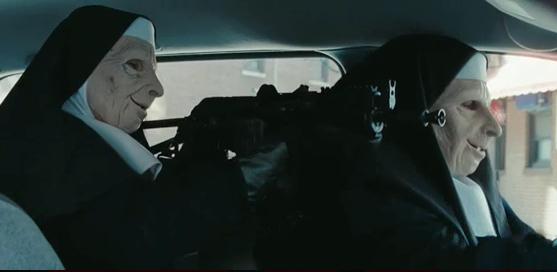
2.) Mesrine: Killer Instinct/Public Enemy #1
(I realize that both of these films came out in 2008, but they didn't get a decent release in the United States until this year, so I'm counting them.)
1.) Animal Kingdom
I rarely do this, but the following films didn't make it on my top 10 list, yet are still some of the best movies of this year. I guess you can consider this a "Grand Prix" list.
-Four Lions
-The Social Network

-Casino Jack/Casino Jack and the United States of Money

-Easy A-Casino Jack/Casino Jack and the United States of Money
Thursday, March 4, 2010
TOP 10 MOVIES OF 2009
In an effort to further undermine the same Academy that waited until 2006 to give Martin Scorsese an Oscar for best director, and also ignored Al Pacino's performance in Donnie Brasco, I give you the 10 truly best movies of 2009:

10.) 44 Inch Chest
 9.) Drag Me to Hell
 8.) The Hurt Locker
 7.) Up in the Air
6.) Moon
 5.) The Brothers Bloom
 4.) The Informant!
 3.) Inglourious Basterds
  2.) In the Loop
 1.) Public Enemies
Sunday, February 14, 2010
Why I LOVE Celebrating Valentine's Day!

I know what most of you are thinking at this exact moment: “100% of women would rather be operated on by an abortionist with Parkinson’s disease before spending a minute in the same room with Dexter, why would he enjoy celebrating Valentine's Day?”
Well, it’s not to increase abortion rates (well OK, maybe it is).
Besides being a day where most of us take on our roles as pawns in the ongoing corporate conspiracy, St. Valentine's Day is also a red(heh) letter day in the calendar of the Chicago Underworld.
To appreciate the whole situation, let me take you through a brief history of the Chicago Underworld.
In the early 1900’s, a man by the name of James "Big Jim" Colosimo, former Precinct Captain of Chicago's First Ward, established himself as “boss” of Chicago. Colosimo and his wife ran a chain of brothels that earned more than $600,000 a year. This made Colosimo the perfect target for the infamous Black Hand extortionist that plagued Italians during the early 1900’s.
You also must keep in mind that this was a time when the Mafia wasn’t like the Mafia we are familiar with today. It wasn’t until 1931 that the Mafia was reorganized and took the shape of the nation wide crime syndicate that we all recognize. Before prohibition, the Mafia wasn’t even the most dominate criminal force in the American Underworld. Several other Italian gangs (like the ‘Ndrangheta from Calabria, and the Comorra from Naples) rivaled the Sicilian Mafia for underworld dominance in America. Not to mention the plethora of native and Irish gangs that also stood in their way.
Anyway, by 1909, the threats of the Black Hand extortionist had become so dire, Colosimo’s wife asked her brother Johnny “The Fox” Torrio to travel from New York to Chicago to help them solve their extortionist problem. Johnny Torrio had been a member of the Five Points Gang, and The James Street Gang, alongside future Mafia bigwig Charlie “Lucky” Lucaino.
The solution to Torrio was simple. Torrio just hired two New York thugs to murder the extortionist when they showed up to collect their money. Colosimo was so grateful he made Torrio his #2 in his criminal empire (which mainly consisted of prostitution, and gambling).
Things had been going soo well for Torrio that by 1919, he brought over a young, violent hoodlum by the name of Al Capone to help Torrio in his business ventures.
The 18th Amendment was passed on January 16th, 1919. This made the production and consumption of alcohol in the United States illegal, causing organized crime groups like the Mafia to profit greatly from both political and religious fanaticism.
As many other leaders of various organized crime groups, Torrio saw this as a perfect business venture to save his organization from extinction. Colosimo didn’t agree. Colosimo forbade Torrio to bootleg any illicit liquor to the various speakeasies that were sprouting up all over Chicago.
Torrio knew that if he wasn’t going to dominate the new bootlegging business in Chicago, somebody else would. That’s why Torrio had Colosimo assassinated on May 11th, 1920. The betrayal would be a prelude to the violence generated by organized crime for dominance over the bootlegging racket.
With Colosimo out of the way, Torrio took control of his new empire, with Capone second in command. With Torrio in command, and Capone making sure that speakeasy operators were purchasing their beer, his organization took control of most of the South Side of Chicago. With their organization rising, both Torrio and Capone made various enemies.
But trying to avoid the bloody turf battles that were about to be unleashed on Chicago, Torrio met with various leaders of bootlegging organizations and carved out territories for them to operate in. Torrio would take the South Side. Dion O’ Banion, leader of the predominantly Irish North Side Gang, took the North Side, and the Sicilian Genna Brothers would take Chicago’s downtown region.
Clashes soon started happening between the Genna’s and O’ Banion. The Genna brothers wanted to have O’ Bannion assassinated, but since they were Sicilians, they would have to get the permission of the governing Mafia body in Chicago before they could make the hit.
The governing Sicilian Mafia body at the time was known as the Unione Siciliana, an organization originally set up to help Sicilian immigrants get settled, but had become corrupted by Sicilian gangsters and now was a front for what was then the American Mafia. Again, at this time, before reorganization in 1931, you must have been a full blooded Sicilian in order to be a member of the Mafia; other Italians could not be a part of the organization. Capone was denied membership because his background was Neapolitan, not Sicilian.
The man in charge of the Unione Siciliana at the time was Mike Merlo. Merlo abhorred violence and denied the fearsome Genna brothers permission to have O’ Banion assassinated. While being alive and in control of the governing Mafia body in Chicago, Merlo was able to keep the peace between the various criminal organizations.
Mike Merlo died of cancer on November 8th, 1924. Two days later the Chicago gangs broke into open warfare.
With the assassination of Dion O’ Banion on November 10th, 1924, by the Genna brothers and Torrio’s South Side triggered the events that would eventually crescendo with the St. Valentine's Day Massacre.
The death of Mike Merlo meant that someone else would have to take leadership of the governing body of the Mafia in Chicago.
Angelo Genna, the youngest and most volatile of the six Genna brothers would take Merlo's position as president of the Unione Siciliana. Capone, desperate to dominate the organization himself, had a close ally, Antonio Lombardo, that Capone would have liked to have seen as head of the organization.
This plan of the Neapolitan Capone didn't sit well with the Sicilian Gennas, who, as members of the hierarchy of the Unione, saw the position of president as one of prestige and honor among their Sicilian brethren. The brothers quickly lobbied the rank and file and pressed hard to put Angelo in as the next president. Capone, unhappy at the turn of events, bided his time under the patient leadership of Torrio.
O'Banion's death would soon be avenged. In January 1925, a retaliation from the North Side gang ended up with the attempted assassination of Johnny Torrio. While Torrio survived the ambush right outside of his apartment, he retired from the soon to be bloody streets of Chicago, left his underworld empire to Capone and moved to Italy. Torrio would later return to the United States and would later be a key player in the reorganization of the American Mafia in 1931.
His rule lasting a little over five months, in May, 1925, Hymie Weiss , now leader of the Irish North Side Gang, dispatched assassins that chased down Angelo Genna in a high speed car chase and then shot him to death. Angelo's death and the loss of leadership of the Unione Siciliana were the least of the remaining brothers' worries. Soon after Angelo’s murder, two of this six brothers: Mike and Antonio Genna were also both murdered. In a period of 44 days three of the Genna brothers were killed. The remaining Genna brothers: Peter, Sam and Vincenzo fled to Sicily, leaving Capone in control of his new empire to take over their rackets.
With Angelo Genna being dispatched so quickly, the Unione Siciliana needed yet another leader. Capone still pushed for his faithful ally, Antonio Lombardo, to become president of the Unione, but lost again to a man by the name of Samuel Samuzzo Amatuna. Unfortunately for Amatuna, his reign as leader would just land a week shorter than Genna’s, thanks to assassins quickly dispatched by Capone.
With the death of Amatuna in November, 1925, Al Capone was finally able to place his own man, Lombardo, into the leadership of the Unione Siciliana. It was not an easy task. Opposing the Capone interests was Giuseppe Aiello, one of nine members active in the Unione. Aiello also desired the seat of power for himself.
While trying to dominate the local Mafia, Capone’s relationship with the North Side Gang continued to sour. On September 20th, 1926, Capone was having lunch with bodyguard Frank Rio at the Hawthorne Hotel when a caravan of cars cruised past the Hawthorne Inn and riddled it with hundreds of submachine gun bullets. Hymie Weiss, then leader of the North Side Gang, and a bodyguard were later assassinated on October 11th, 1926 in a hail of gunfire while crossing the street, leaving George “Bugs” Moran to take control of the North Side Gang.
Desperate to defeat both Capone and Lombardo, and secure his influence over the Unione Siciliana, Giuseppe Aiello turned to Bugs Moran and the North Side Gang for assistance. After several months of “peace”, assassins of Moran, members of the North Side Gang, and brothers, Frank and Peter Gusenberg, soon gunned down Lombardo in the busy Chicago street on September 7th , 1928.
With the assassination of Lombardo, the Unione needed yet ANOTHER leader. Aiello was yet again denied leadership, and another Capone ally, Pasqualino "Patsy" Lolordo took leadership. Shortly after, on January 8, 1929, "Patsy" Lolordo was shot to death in his house by an unknown gunman…..but you could probably guess who he worked for by now. And guess who still didn’t get to be President of the Unione? That’s right! Joseph ''Hop Toad'' Guinta took over leadership of the Unione Siciliana.
It didn’t take long for Capone to figure out that the demise of Lolordo and Lomardo were both carefully orchestrated by Giuseppe Aiello. Capone was planning, along with one of his top triggerman, "Machine Gun" Jack McGurn, a damaging retaliatory response that would be remembered throughout history as the St. Valentine's Day Massacre.
The plan was fairly simple. While Capone was away on vacation at his Florida estate(in order to have a solid alibi), assassins disguised as cops would be waiting outside one of Moran’s garages, one that he visited every day, and when Moran would enter the garage, the “police” would barge in on them and stage a raid and then assassinate Moran and his men.
At around 10:30 a.m. on February, 14th, 1929, the Moran gang had already arrived at the warehouse. However, Moran himself was not inside. One account states that Moran was supposedly approaching the warehouse, spotted the police car, and fled the scene to a nearby coffee shop. Another account was that Moran was simply late getting there.
The lookouts that Capone had placed across the street to insure that Moran himself was inside the garage, mistook one of Moran’s men for Moran himself. Thinking that Moran himself was inside the garage, Capone’s lookouts signaled for the assassins to enter the warehouse.
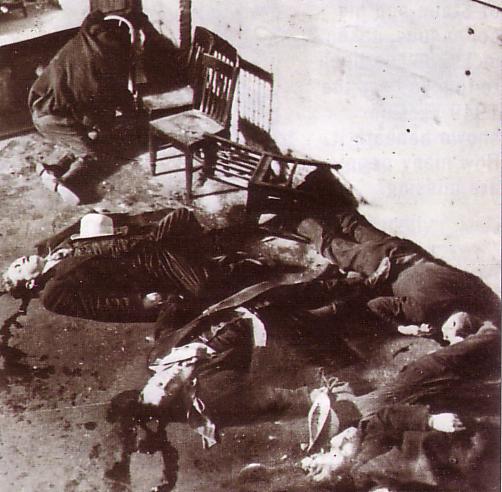
Witnesses outside the garage saw a Cadillac sedan pull to a stop in front of the garage. Four men, two dressed in police uniform, emerged and walked inside. The two phony police, carrying shotguns, entered the rear portion of the garage and found members of Moran's gang. The killers told the seven men to line up facing the back wall. There was apparently not any resistance, as the Moran men thought their captors were real police. Then the two "police officers" then signaled the pair in civilian clothes. Two of the killers started shooting with Thompson sub-machine guns, one containing a 20-round magazine and the other a 50-round drum. All seven men were killed in a volley of seventy machine-gun bullets and two shotgun blasts according to the coroner's report. To show bystanders that everything was under control, the men in street clothes came out with their hands up, prodded by the two uniformed cops.
The seven men that were killed that day were: James Clark, Frank and Pete Gusenberg(brothers), Adam Heyer, Johnny May, Dr. Reinhardt Schwimmer, and Al Weinshank. All of these men had a position in Moran's criminal operations, from button men to front men.
When Moran heard about the massacre, he checked himself into a hospital claiming to have some exotic sickness. The press eventually found him and when asked who could have done such a thing, Moran responded with: “Only Capone kills like that.”
While Moran himself wasn’t killed in the incident, his gang was still decimated.
The North Side Gang eventually lost control over its rackets to the Capone organization, leaving Al Capone completely in control over Chicago. The rest of Moran’s criminal career was nothing more than petty thievery. Moran was arrested in 1946 for robbing $10,000 from a bank messenger; he was convicted and sentenced to prison. He later died of cancer on February 25th, 1957. He was given a pauper's burial outside of prison.
With virtually ever other obstacle out of his way, Capone was in complete control of Chicago. He owned the police, the politicians, and the judges. Capone was the law. But his plan eventually backfired. The public had grown tired of the gruesome violence in Chicago, generated by prohibition. While the St. Valentine's Day Massacre was successful in removing any business opposition from the Capone interest, it had also made national headlines. Finally answering the cries of an outraged public, the Federal Government planed to put Capone behind bars.
Even though Capone was successful in defeating Bugs Moran and the North Side Gang, he still had the treacherous Giuseppe Aiello organizing assassination attempts on Capone. Capone’s uncanny ability not to get shot, even though several dozen assassination attempts were put in motion against the mob boss, forced Aiello to turn to two of Capone’s own assassins to help murder him. Albert Anselmi, John Scalise, as well as the new head of the Unione, Joseph "Hop Toad" Giunta, met with Aiello, who proposed that if Capone was assassinated they could take control of his empire for themselves.
But in April 1929, after getting wind of the plot, Capone beat them to the punch and had the three men killed, dispatched with a beating with a baseball bat, followed by a gunshot to the face to finish the job (the scene famed by a number of movies in which Capone murders associates with a baseball bat at a banquet is based on these killings). All three of their bodies were found in an abandoned automobile several days later.
With the death of Joseph "Hop Toad" Giunta, Giuseppe Aiello was finally able to take control of the Unione Siciliana. While Aiello was coming into power, Capone was going to jail. Capone served a one year sentence in prison for carrying a concealed weapon. Capone probably could have gotten out of serving jail time, but did it at the behest of other mob bosses, who thought that Capone had attracted too much attention to the underworld violence of Chicago.
While in jail, Capone learned of plans that Aiello again was trying to assassinate him. Capone, finally deciding to assassinate Aiello, bided his time in prison.
On October 23rd, 1930, with several of his lieutenants being murdered in the previous year, Aiello was making plans to permanently leave Chicago, allegedly to move to Mexico. Upon leaving a local building, a gunman in a second-floor window across the street started firing at Aiello with a submachine gun. Aiello toppled off the building steps and moved around the corner, out of the line of fire. Unfortunately for Aiello, he stumbled into the range of a second submachine gun nest on the third floor of another apartment block. Aiello was taken to Garfield Park Hospital, but was pronounced dead on arrival. The coroner eventually removed 59 bullets from his body.
While Capone was yet again victorious in getting rid of another underworld nemesis, it would be Treasury Agent Elliot Ness, who would be the downfall of Capone. Elliot Ness and his team of “Untouchables” had a serious impact on Capone's operations, but it was income tax evasion that was the key weapon. In a number of federal grand jury cases in 1931, Capone was charged with 22 counts of tax evasion and also 5,000 violations of the Volstead Act. On October 17, 1931, Capone was sentenced to eleven years, and following a failed appeal, he began his sentence in 1932.
With prohibition ending, along with a major Mafia revolution and reorganization underway, which lead the newly organized modern Mafia to be the dominate force in the American Underworld for several decades, Capone found himself behind bars.
Capone would be eventually transferred to Alcatraz prison, where the isolation from the outside world didn’t help the Syphilis that was slowly eating away at his brain.
After his release Capone’s mental health had greatly diminished. Capone often raved on about Communists, foreigners, and George Moran, who he was convinced, was still plotting to kill him from his Ohio prison cell. On January 21st, 1947, Capone suffered a stroke. He regained consciousness and started to improve but contracted pneumonia two days later. Capone then suffered a fatal cardiac arrest the next day.
So instead of being cogs in a massive corporate conspiracy, liberate yourselves and celebrate what Valentine's Day is truly about: historic underworld violence!
Sources
-The Gangs of Chicago-Herbert Asbury
-The Outfit-Gus Russo
-Capone: The Man and the Era-Laurence Bergreen
-The Encyclopedia of Gangsters: A Worldwide Guide to Organized Crime
Monday, December 28, 2009
TOP 25 MOVIES OF THE DECADE
Here is the list of my favorite films of the following decade.(2000-2009)
And yes, I realize that The Company was a TNT miniseries and not a feature film, but Michael Keaton is such a bad ass, I had to put it on the list anyway.
And yes, I realize that The Company was a TNT miniseries and not a feature film, but Michael Keaton is such a bad ass, I had to put it on the list anyway.
 25.) The Good Shepherd(2006)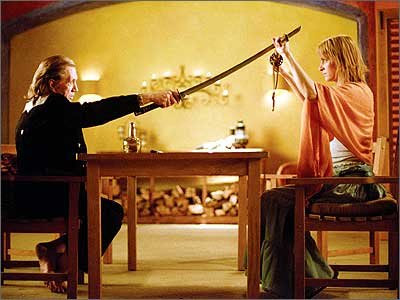
24.) Kill Bill Vol. 2(2004)
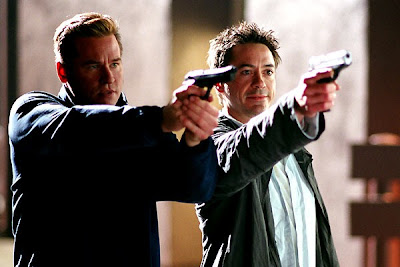
23.) Kiss Kiss Bang Bang(2005)

22.) In the Loop(2009)

21.) Brick(2005)

20.) Road to Perdition(2002)
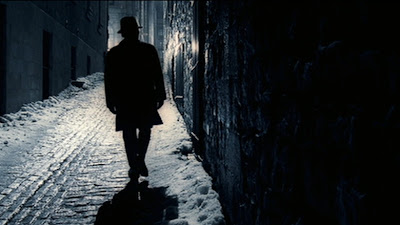
19.) Confessions of a Dangerous Mind(2002)

18.) The Company(2007)
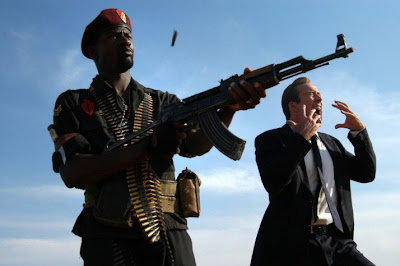
17.) Lord of War(2005)
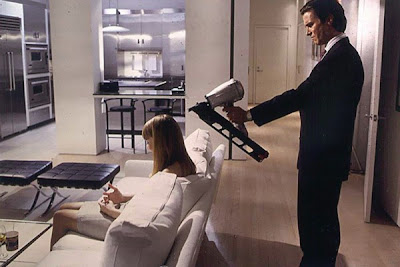
16.) American Psycho(2000)
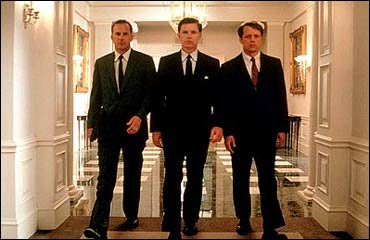
15.) Thirteen Days(2000)
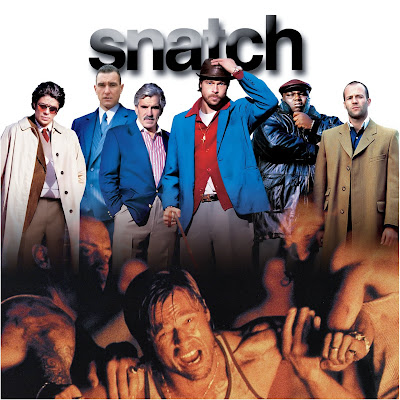
14.) Snatch(2000)
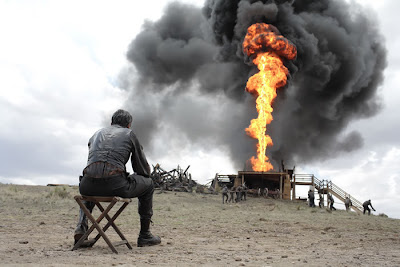
13.) There Will Be Blood(2007)
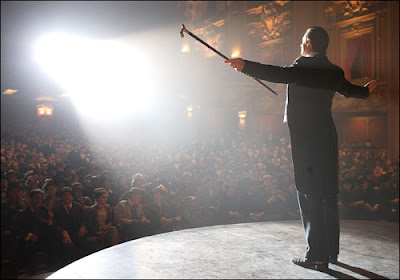
12.) The Prestige(2006)
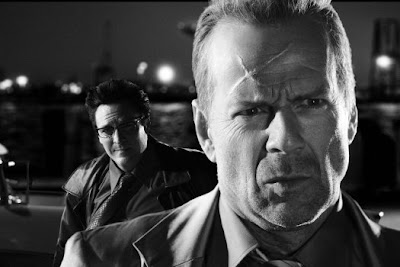
11.) Sin City(2005)
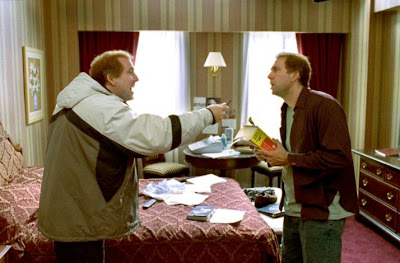
10.) Adaptation(2002)

9.) No Country for Old Men(2007)

8.) Unbreakable(2000)

7.) A History of Violence(2005)
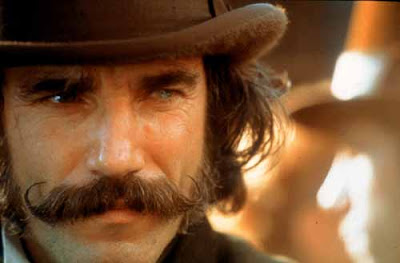
6.) Gangs of New York(2002)
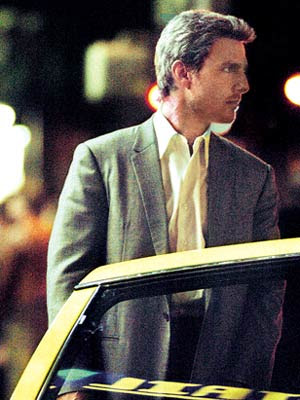
5.) Collateral(2004)
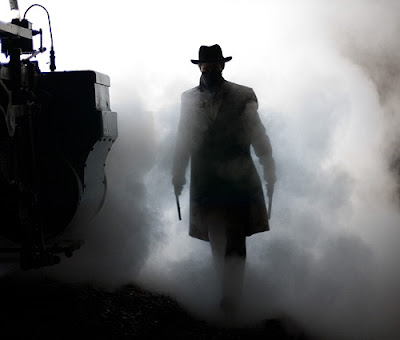
4.) The Assassination of Jesse James by the Coward Robert Ford(2007)
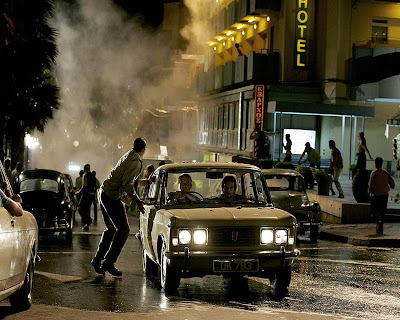
3.) Munich(2005)
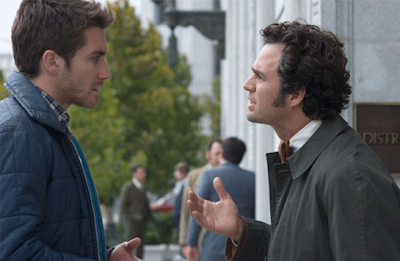
2.) Zodiac(2007)
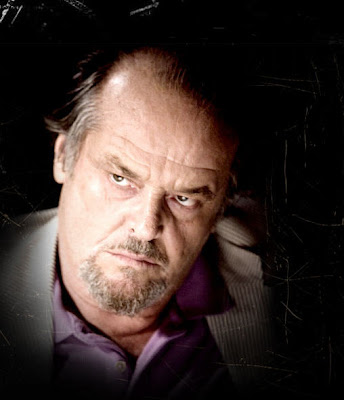
1.) The Departed(2006)
Subscribe to:
Posts (Atom)